 The Alienist by Caleb Carr The Alienist is a suspenseful murder mystery set in 1896 New York City while Theodore Roosevelt is serving as Police Commissioner. Here an up and coming Criminal Psychologist (aka Alienist) leads a team made up of Roosevelt’s friends and colleagues in an attempt to identify and apprehend a serial killer preying on immigrant boy prostitutes. In addition to the psychologist, there is a journalist (the narrator of the story), a set of brother detectives who are well ahead of their colleagues in the art of criminal science, and a young woman trying to break the “boy’s only club” of law enforcement. Lazlo Kriezler, a psychologist, and John Moore, a crime reporter, are former Harvard classmates of Roosevelt. They are joined by Sara Howard, a police secretary with aspirations of becoming the first female detective and the Isaacson brothers. This eclectic group of novice sleuths set out to define the psyche of the serial killer, a concept which will evolve into present day criminal profiling; previously theoretical notions only, they attempt to put into practice concepts that until then were only espoused in psychology journals and papers. Some ideas prove fruitful; others --- like taking a photograph of a corpse’s eye to see if his last vision was imprinted on it --- are shown to be unreliable. Caleb Carr writes a very descriptive story that takes the reader, layer by layer, into the workings of the mind of the serial killer. I enjoyed the book and am eager to read Carr's next offering - The Angel of Darkness. |
Sunday, June 19, 2011
Criminal profiling in 1890's

Wednesday, May 4, 2011
Author transitions from Medical History to Medical Mystery

The Anatomy of Deception
By Lawrence GoldstoneThe tale centers on a group of young doctors attending the University of Pennsylvania Medical School under the tutelage of Dr. William Osler, a renowned pathologist and physician. The protagonist, a Midwesterner named Ephraim Carroll, is Osler’s prize student who in first person recounts the events surrounding this mystery set in 1889 Philadelphia.
From the opening scene in the Dead House, the morgue attached to Philadelphia General Hospital where autopsies are being conducted on the unclaimed bodies of the inner city, to the salons in the grand homes of the City of Brotherly Love, to the seedy alleys of the cities waterfront, Lawrence Goldstone crafts a suspenseful tale of intrigue, keeping the reader slightly off-balance throughout this book which is peppered with historical characters from the early days of "modern medicine". Both William Osler and William Stewart Halsted, a prominent surgeon, were two of the founding doctors of Johns Hopkins in Baltimore, and play key roles in this novel.Goldstone, known for writing narrative history of natural science and political science, successfully ventures into the realm of fiction with Anatomy of Deception. He effectively blends the history of medical advancements of that era with a deft telling of a suspenseful murder mystery involving a young Philadelphia debutante.
Thursday, April 21, 2011
The chosen few at the frozen Chosin

Pinned down by sniper fire during the day and facing mass attacks at night, the 246 Marines and Navy Corpsmen of Fox Company (2/7, 1st Marine Div) held open a vital choke point controlling the only road from the Chosin Reservoir to the Marine base camp at Hagaru during the brutally cold December of 1950. By defending the Toktong Pass against a vastly superior Chinese force, the men of Fox Company made it possible for the three regiments of roughly 8,000 Marines at Yadum-ni, on the west side of the reservoir, to perform a successful retrograde to Hagaru, while under heavy attack from multiple Chinese divisions.
With the aid of artillery firing from Hagaru and close air support provided by Marine and allied aircraft, the men of Fox Company were able to hold the hill overlooking the dirt and gravel road for five-days against the Chinses 59th Division. Bob Drury and Tom Clavin do a masterful job of telling this small unit’s story in The Last Stand of Fox Company.
At negative 35-degrees, the weather was just as deadly as the bullets and grenades flying around the hill – aptly named Fox Hill – as the Marines suffered from frostbite and exposure. The ground was frozen solid, making it impossible to dig-in, forcing the men to use the frozen bodies of the dead to build parapets as protection against enemy fire; weapons became inoperable as the firing pins and other moving parts froze solid; often in whiteout conditions, snow blizzards reduced visibility to just a few yards. Yet the warriors overcame all these obstacles knowing that they alone were keeping the road and pass open to allow their fellow Marines a chance at escape.
 The authors do a masterful job painting a mental picture of what the Marines endured. Through interviewing survivors of the engagement and researching historical documents Drury and Clavin bring into perspective the numbing cold, the searing pain of bullets piercing flesh, the throbbing of frozen feet, and the mental anguish of a near hopeless situation. They also show what makes a Marine a Marine and that the adage “uncommon valor was a common virtue” again held true for the Corps.
 Sunday, March 20, 2011
How the Irish Saved Civilization

The first in Thomas Cahill’s Hinges of History series, How the Irish Saved Civilization, tells the story of how Ireland was transformed from a barbarian land to a cultured society through the good works of St. Patrick during the waning years of the Roman Empire and how the Irish, now converted to Christianity, established monasteries with scriptoriums saving literature for future generations by transcribing Greek, Roman, and Latin works during the Dark Ages.
Though a short book of just over 200-pages, it was an exceedingly long read, being tedious and hard to follow at times. It did contain some interesting information in bits and pieces - the life of St. Patrick, the evolution of peoples in what is now Great Britain (England, Scotland, Wales), and how England and Scotland got their names, to list just a few.
Cahill relates the story of St. Patrick (Patricius) from his kidnapping at the age of sixteen by marauding Irish, to his life of isolation as a Shepard, his escape and journey back to Briton, and his ultimate return to Ireland as a missionary where he converted the Irish people to Christianity.
He also puts into perspective the relationship of many early peoples - Picts, Britons, Celts, Angles, Saxons, Jutes, Romans, Vikings, Goths – and how they effected one another. The story of the Angles, Saxons, and Jutes driving the Celtic Britons into what is now Wales and Cornwall was most interesting. Cahill’s writing of early Irish customs was also of interest.
The author gets bogged down when he tries to describe the waning years of the Roman Empire. His contrast and comparisons of the Roman Catholics to the monastic Christian leaders of Ireland is tiresome.
Sunday, January 16, 2011
Pressfield brings history to life in his writing, but fails with "Killing Rommel"

As a fan of the 1960's TV series "Rat Patrol", which was loosely based on the LRDG, and seeing that Pressfield is one of my favorite historical fiction authors, I anxiously dove into reading Killing Rommel. Page after page, I waited for the pace to quicken and the action to begin only to find myself at the end of the book wanting. Unlike Gate of Fire, Killing Rommel lacked substance, tantalizing plot, descriptively rich characters, and above all action.


Sunday, October 24, 2010
Defense against the U-boat and how it was accomplished.

In the narrative A Measureless Peril, Richard Snow writes of the need, tactics, and outcome of convoying merchant ships with military escorts across the Atlantic Ocean during WWII. The policy of convoying was necessary due to the Nazi’s successful use of wolf-pack tactics employed by their submarines - U-Boats - to sink ships carrying men and material to the European theater of war.
Each chapter is an individual story that is interconnected to the overall theme of the book. Many chapters link to one another through a common character, ship, or incident.
In this very entertaining and enlightening read, the author takes us back in maritime history to lay background for the development of the U-Boat tactics that were so successful during WWII. British, American and German perspective is given to the conflict in the Atlantic. He tells the history of the development of the torpedo in the late 1800's, the torpedo-boat (the precursor of the submarine), and the torpedo-boat destroyer (the forerunner to our present day destroyer class warships). Snow describes the evolution of the destroyer from the original USS Bainbridge at 400-tons to the 2,000-ton Fletcher Class destroyers of WWII. Best of all he answers the question of the differences between a Destroyer and a Destroyer Escort.
Snow’s father was an architect who joined the Navy at the outbreak of the war and served aboard a destroyer stationed in the Atlantic. He wrote vivid letters, many accompanied with sketches, home to his wife throughout his service. Snow draws on his father’s personal correspondence as well as research in presenting this history.
Sunday, June 13, 2010
Hicks has fascination with one legged men
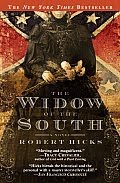

In Robert Hicks two offerings - The Widow of the South and A Separate Country, his characters are disfigured veterans of the Civil War battle of Franklin, Tennessee. Whether Sgt. Zachariah Cashwell or Gen. John Bell Hood, both men left Franklin less than a whole man. Cashwell arrived at Franklin with the Army of the Tennessee a battle-hardened veteran that, by the grace of God, had escaped physical harm in the war. Hood, on the other hand, was crippled well before the 1864 winter campaign in middle Tennessee, having lost a leg at the Battle of Chickamuaga and the use of an arm at Gettysburg. Cashwell would lose his leg to a musket ball, but find a new lease on life while convalescing at the home of Carrie McGavick; Hood would leave his soul on the battlefield, and carry the guilt of senselessly sending so many men to their death for the remainder of his days.
The books feature strong women and weak men. Cashwell had Carrie McGavick to renew his hope; Hood had Anna Marie Hennen, a Creole beauty that saw past his physical limitations to give him eleven children.
Death and/or impending death are prevalent throughout both novels set for the most part in the postbellum south. The pages are filled with tales of the disfigured – men who are dwarfs, eyeless, limbless, and scarred - physically and emotionally. Young men who must adapt to functioning in non-military situations after years of campaigning on the battlefield; men who’s injuries have left them so grotesque that civilians turn their heads and look away when they pass – the lower half of their face shot away, nose and eye missing, legless – men who want to cry out I didn’t do this to myself, I did it for you, I’m still the same man inside as I was before receiving these battlefield wounds.
Both books are heavy – depressing, defeated, despondent, dreary, filled with pain, betrayal, anguish, and agony.
A Separate Country is set in New Orleans and gives insight into the Creole culture both antebellum and postbellum. It also tracks some well-known Civil War figures in their attempt to adjust to civilian life. This was my favorite of the two Hicks historical novels.
Friday, April 16, 2010
Bounty Trilogy
Mutiny on the Bounty, Men Against the Sea, Pitcairn's Island published in the early 1930's by by Charles Nordhoff and James Norman Hall.
The trilogy, based on a true story, is a fictionalized account of the confrontation between William Bligh and Fletcher Christian which culminated in a mutiny on the high seas aboard British Royal Navy ship HMS Bounty in 1789, and its aftermath for these two men. In the flow of these books villain becomes hero and hero becomes villain.

The keystone to this three part saga is Mutiny on the Bounty, narrated by a Midshipmen aboard the Bounty. After sailing from England to Tahiti on a scientific expedition to collect breadfruit plants in the hopes of introducing them as a new food source in the West Indies colonies, the crew of the Bounty become enamored with the warm weather and easy way of life among the natives on the island. Living ashore with the Polynesians for several months, the crew, newly tattooed in the style of the Tahitians, begrudgingly set sail for the West Indies, leaving romantic relationships in their wake. The novelist contrast the beauty of the South Pacific islands with the harshness of life at sea in the 18th century. Mutiny, romance, injustice, duty verses desire, set adrift at sea, running from authorities, attempting to start a new life -- all transpire in this first novel.
Most have seen at least one of Hollywood's renditions of this story, but the cinema is unable to provide the depth the written word can, nor the detail the story deserves. Does Bligh misuse his power as Ship's Captain, can Christian justify this mutinous actions as an act of romantic necessity, these are questions the reader must answer.

 Men Against the Sea is the story of William Bligh and his 18 men that are marooned on the ship's 23-foot open launch and set adrift. Their fight for survival on the high seas as they navigate through over 3,600 miles of open water is detailed by the narrator in a most compelling way. I list Men Against the Sea as one of my all-time favorite adventure books; it is short enough to be read in a single sitting.
The final piece to the trilogy is Pitcairn’s Island, the story of Fletcher Christian and his mutineers as they are joined by their Tahitian wives and other Polynesians and flee to an uncharted island in the South Pacific to live out their lives in seclusion. The worst of human nature materializes as they realize they are trapped on the island with no chance of escape; greed, jealously, paranoia all takes a toll on the small band of inhabitants.
The trilogy, based on a true story, is a fictionalized account of the confrontation between William Bligh and Fletcher Christian which culminated in a mutiny on the high seas aboard British Royal Navy ship HMS Bounty in 1789, and its aftermath for these two men. In the flow of these books villain becomes hero and hero becomes villain.

The keystone to this three part saga is Mutiny on the Bounty, narrated by a Midshipmen aboard the Bounty. After sailing from England to Tahiti on a scientific expedition to collect breadfruit plants in the hopes of introducing them as a new food source in the West Indies colonies, the crew of the Bounty become enamored with the warm weather and easy way of life among the natives on the island. Living ashore with the Polynesians for several months, the crew, newly tattooed in the style of the Tahitians, begrudgingly set sail for the West Indies, leaving romantic relationships in their wake. The novelist contrast the beauty of the South Pacific islands with the harshness of life at sea in the 18th century. Mutiny, romance, injustice, duty verses desire, set adrift at sea, running from authorities, attempting to start a new life -- all transpire in this first novel.
Most have seen at least one of Hollywood's renditions of this story, but the cinema is unable to provide the depth the written word can, nor the detail the story deserves. Does Bligh misuse his power as Ship's Captain, can Christian justify this mutinous actions as an act of romantic necessity, these are questions the reader must answer.

 Men Against the Sea is the story of William Bligh and his 18 men that are marooned on the ship's 23-foot open launch and set adrift. Their fight for survival on the high seas as they navigate through over 3,600 miles of open water is detailed by the narrator in a most compelling way. I list Men Against the Sea as one of my all-time favorite adventure books; it is short enough to be read in a single sitting.
 The final piece to the trilogy is Pitcairn’s Island, the story of Fletcher Christian and his mutineers as they are joined by their Tahitian wives and other Polynesians and flee to an uncharted island in the South Pacific to live out their lives in seclusion. The worst of human nature materializes as they realize they are trapped on the island with no chance of escape; greed, jealously, paranoia all takes a toll on the small band of inhabitants.
Tuesday, April 6, 2010
Andy Andrews inspirational books
The Traveler's Gift: Seven Decisions That Determine Personal Success - Andy Andrews
 “Like a serpent easing up his spine and wrapping itself around his throat, it wasn’t a quick, devastating attack, but a slow, gripping realization that life, as he knew it, was over. He was forty-six years old. He had no job. He had no money. He had no purpose.”
Driving to nowhere in a patched up used car after losing his part-time job loading trucks at a hardware store, David Ponder stops and attempts to pray. With what he considers no result from his prayer, he starts to drive again with the thought of suicide in his mind, culminating in a head-on collision with a tree by the roadside.
Though a half-dozen years older than Ponder, the protagonist of Andy Andrews’ The Traveler’s Gift, I had instant empathy with Ponder and his predicament, having recently closed my business of twenty plus years due to the recession and taking an hourly position at a local factory to put food on the table. I thought to myself – that could be me he is describing.
In a coma, Ponder visits seven historical figures that each impart a life lesson to him. He titles these lessons ‘Seven Decisions that Determine Personal Success.’ Readers may find different elements that hit-home. My personal epiphanies while reading the book were “choose to be happy,” and “forgive yourself and others.” A close friend keyed in on “have a decided heart.” According to your current life situation, different points discussed by these historic figures may prove influential in guiding you in your attempt to overcome whatever obstacle may currently lie in your life’s path.
This thought provoking read will give you pause for inter reflection.

Driving to nowhere in a patched up used car after losing his part-time job loading trucks at a hardware store, David Ponder stops and attempts to pray. With what he considers no result from his prayer, he starts to drive again with the thought of suicide in his mind, culminating in a head-on collision with a tree by the roadside.
Though a half-dozen years older than Ponder, the protagonist of Andy Andrews’ The Traveler’s Gift, I had instant empathy with Ponder and his predicament, having recently closed my business of twenty plus years due to the recession and taking an hourly position at a local factory to put food on the table. I thought to myself – that could be me he is describing.
In a coma, Ponder visits seven historical figures that each impart a life lesson to him. He titles these lessons ‘Seven Decisions that Determine Personal Success.’ Readers may find different elements that hit-home. My personal epiphanies while reading the book were “choose to be happy,” and “forgive yourself and others.” A close friend keyed in on “have a decided heart.” According to your current life situation, different points discussed by these historic figures may prove influential in guiding you in your attempt to overcome whatever obstacle may currently lie in your life’s path.
This thought provoking read will give you pause for inter reflection.
Thursday, April 1, 2010
Cherokee
 Charles Frazier follows up the success of Cold Mountain with another offering set in the mountains of North Carolina - Thirteen Moons. Frazier continues to write about a region he has much familiarity, having been born in the scenic mountain town of Ashville, and schooled at nearby Appalachian State University, in Booneville.
Will, the protagonist of Thirteen Moons, is a twelve-year-old sold by his parents into indentured servitude and required to manage a trading post at the edge of the Cherokee Nation. Overtime he is adopted by a Cherokee chief; as an adult he fights for the rights of a small group of Cherokee and mixed-bloods who remain after the Indians were forced to relocate to Oklahoma Territory in the 1830's during Andrew Jackson's presidency.
There is an active love story between Will and a mixed-blood named Claire embedded in the novel. The romance is laced throughout the story, tying together the decades the book spans. Here lies the Gordian Knot of the tale, winning and keeping Claire's love.
Though the author has a disclaimer in the book to the contrary, the novel seems to be based on William Holland Thomas, the man who helped gain citizenship and thus the right to remain in the Carolinas for the Indians that remained behind in the Smokey Mountains after the forced removal. This group that stayed became the nucleus of what is now known as the Eastern Band of Cherokee Indians.
Fraizer's strength as a story teller is his ability to paint vivid scenes. His descriptions of people, places and events jump off the page. His words bring to life the smell of sweat on a hard ridden horse as well as the taste of a kiss; he pulls the reader into the moment with his descriptions, whether it is the beauty of a misty sunrise on a mountain top or the seediness of a hunting cabin poker game, Frazier captures the scene.
I highly recommend this offering as historical fiction for its adventure, romance and Frazier's abilities as a wordsmith.
Fraizer's strength as a story teller is his ability to paint vivid scenes. His descriptions of people, places and events jump off the page. His words bring to life the smell of sweat on a hard ridden horse as well as the taste of a kiss; he pulls the reader into the moment with his descriptions, whether it is the beauty of a misty sunrise on a mountain top or the seediness of a hunting cabin poker game, Frazier captures the scene.
I highly recommend this offering as historical fiction for its adventure, romance and Frazier's abilities as a wordsmith.
Subscribe to:
Posts (Atom)